
Gluten-Free Cottage Cheese French Bread Loaf (No Yeast)

|
This Gluten-Free Cottage Cheese French Bread is a no-yeast, high-protein loaf that actually slices. Made with oat flour, almond flour, and blended cottage cheese, it bakes up crusty on the outside and tender inside—no rising, kneading, or specialty tools required.

Want a crusty, French-style loaf without gluten, yeast, or long rising times? This Gluten-Free Cottage Cheese French Bread Loaf (No Yeast) bakes up with a golden crust and a tender, sliceable center—no kneading, fermenting, or specialty tools required.
Unlike viral cottage cheese flatbreads that behave more like wraps, this recipe is a true loaf. Blended cottage cheese adds moisture and protein, while oat flour and almond flour provide real structure so the bread holds together, slices cleanly, and doesn’t taste like an omelet once it cools.
I make this bread when I want something that feels like actual bread—something sturdy enough for garlic bread, soup dipping, or sandwiches. Everything mixes in one bowl, goes straight into the oven, and stays gentle on sensitive tummies while still delivering that classic French-bread feel. This is a quick bread style loaf, not a traditional yeast-fermented baguette, but it delivers the crust and structure most people miss with gluten-free bread.
Why This Gluten-Free Cottage Cheese Bread Works
- Built like a loaf, not a wrap: Oat flour and almond flour create real structure, so this bread slices cleanly instead of folding or tearing like viral cottage cheese flatbreads.
- Blended cottage cheese for even texture: Blending until completely smooth eliminates curds and wet pockets, adding moisture and protein without making the bread soggy.
- Balanced eggs—no omelet taste: Eggs provide structure, but the ratios and added flours keep the finished loaf savory rather than eggy.
- No yeast, no collapse: Baking powder gives steady lift without over-rising, preventing the sink-in-the-middle problem common in heavier cottage cheese loaves.
- Designed to cool and set: Letting the loaf cool completely allows the proteins to firm up, which is key for clean slices and a non-gummy texture.

Ingredients & Substitutions
Here is everything you need to make gluten-free cottage cheese French bread:
- Oat Flour: This is the base that gives the loaf structure without making it heavy. I usually make my own by blending rolled oats until fine, but store-bought gluten-free oat flour works just as well if that’s what you have.
- Almond Flour: This adds moisture and keeps the bread from drying out, especially once it cools. I’ve found it also helps soften the egg flavor. For a nut-free option, sunflower seed flour has given me the closest texture.
| Options | w/ Almond Flour | w/o Almond Flour |
|---|---|---|
| Oat Flour | 1-1/4 cups Oat Flour + 1/2 cup Almond Flour | 1-1/2 cups Oat Flour |
| Brown Rice Flour | 1-1/3 cups Brown Rice Flour + 1/2 cup Almond Flour | 1-1/2 cups Brown Rice Flour |
| Gluten-Free Flour Blend | 1-1/4 cups Gluten-Free Flour + 1/2 cup Almond Flour | 1-1/2 cups Gluten-Free Flour |
| Cassava Flour | 1/2 cup Cassava Flour + 1 cup Almond Flour | Not recommended for a ‘bread’ consistency |
- Parmesan Cheese: A small amount goes a long way here. It adds savory flavor and helps the crust brown so the loaf feels more like French bread and less like a quick bread. Nutritional yeast works well if you need a dairy-free swap.
- Cottage Cheese: This is the ingredient that makes the bread moist and high in protein. I always blend it completely smooth before adding it to the bowl. Thicker cottage cheese works best and helps prevent a soggy center. Greek yogurt can be used if needed, but it should be thick.
- Egg: The egg helps hold everything together so the loaf slices cleanly. If you need an egg-free option, a flax egg works, but the loaf will be a little softer.
- Baking Powder: This is what lifts the loaf without yeast. If your baking powder is old, the bread will turn out dense. I learned that one the hard way.
- Salt: Don’t skip it. It balances the richness of the cottage cheese and eggs and keeps the bread from tasting flat.
- Sesame Seeds (optional): I like adding these for that classic French bread look and a little crunch on the crust. Poppy seeds or everything bagel seasoning are fun swaps, or you can leave them off.
- Egg White (for brushing): Brushing the top with egg white gives the loaf a shiny, golden crust. When I skip it, I use a little olive oil or dairy-free milk instead.
Easily Adapt This Recipe for Any Diet
This bread is easy to adjust if you need to work around allergies or preferences. I’ve tested these swaps, and they keep the loaf sturdy and sliceable when done as noted.
- Gluten-Free: This recipe is already gluten-free as written. If you have celiac disease, make sure your oat flour is certified gluten-free since regular oats can be cross-contaminated.
- Dairy-Free: Thick dairy-free Greek-style yogurt works best in place of cottage cheese. Regular yogurt is too runny and can make the loaf gummy. Swap the parmesan with nutritional yeast or a dairy-free parmesan alternative for flavor and browning.
- Vegan: Use plant-based Greek-style yogurt instead of cottage cheese, nutritional yeast in place of parmesan, and a flax egg for structure. Brush the top with plant milk instead of egg white to help the crust brown.
💡 Pro Tip: If you try a substitution, let me know how it worked for you. Those notes help other readers make this bread successfully too.

How to Make My Gluten-Free French Bread Recipe
These step-by-step instructions are also in the recipe card below, but I like sharing the why behind each step here since it makes a big difference with gluten-free bread.
Step 1: Prepare the Cottage Cheese and Preheat
Preheat your oven to 350°F. Line a baking sheet with parchment paper and lightly spray it with oil, or use a silicone baking mat if you have one. This dough is moist, and that extra step helps prevent sticking.
Blend the cottage cheese until completely smooth. This step matters. Any curds left behind can create wet pockets and affect how the loaf sets as it bakes.

Step 2: Mix the Bread Dough
In a large bowl, whisk together 1¼ cups oat flour, ½ cup almond flour, ¼ cup grated parmesan cheese, 1½ teaspoons baking powder, and ½ teaspoon salt until evenly combined.
Add the blended cottage cheese and 1 large egg, then mix just until a dough forms. It should feel slightly tacky but not wet. If it feels dry, add 1 to 2 tablespoons milk. If it feels too loose, sprinkle in a little more oat flour.


Step 3: Shape the Loaf
Lightly oil your hands and shape the dough into a smooth loaf directly on the prepared baking sheet. Aim for even thickness so it bakes evenly.
In a small bowl, lightly beat 1 egg white and brush it over the top of the loaf. Sprinkle with 1 teaspoon sesame seeds if using. This helps the crust brown and gives the loaf that classic French bread look.


Step 4: Bake and Cool
Bake for 28 to 32 minutes, until the loaf is golden and feels firm when lightly pressed. Transfer to a wire rack and let it cool completely before slicing.
This cooling step makes a big difference. The bread continues to set as it cools, and slicing too soon can make the center feel gummy even when it is fully baked.

Expert Recipe Tips
- Blend the cottage cheese completely: Even small curds can create wet spots and weak structure in the loaf. I always blend it until smooth before adding it to the bowl.
- Use a thick cottage cheese: Thicker cottage cheese works best and helps prevent a soggy center. If yours looks watery, drain it briefly before blending.
- Do not overmix the dough: Once the wet and dry ingredients come together, stop mixing. Overmixing can make the loaf dense instead of tender.
- Bake right away: This dough should go into the oven as soon as it is shaped. Letting it sit too long allows the oat flour to absorb more moisture and can make the loaf heavy.
- Let the bread cool completely: This step matters more than you think. The loaf firms up as it cools, and slicing too soon can make it seem underbaked even when it is not.
Delicious Serving Suggestions
- Strawberry jam: I love slicing and lightly toasting this bread, then spreading it with strawberry jam. The crust crisps up while the inside stays tender, which makes it perfect for simple breakfasts.
- Cheesy garlic bread: Slice the loaf in half, spread with butter, garlic, and a little cheese, then bake until bubbly. This is one of our favorite ways to serve it and it pairs especially well with soup.
- Minestrone soup: This bread is sturdy enough for dipping without falling apart. I like serving thick slices alongside a warm bowl of minestrone for an easy, comforting meal.
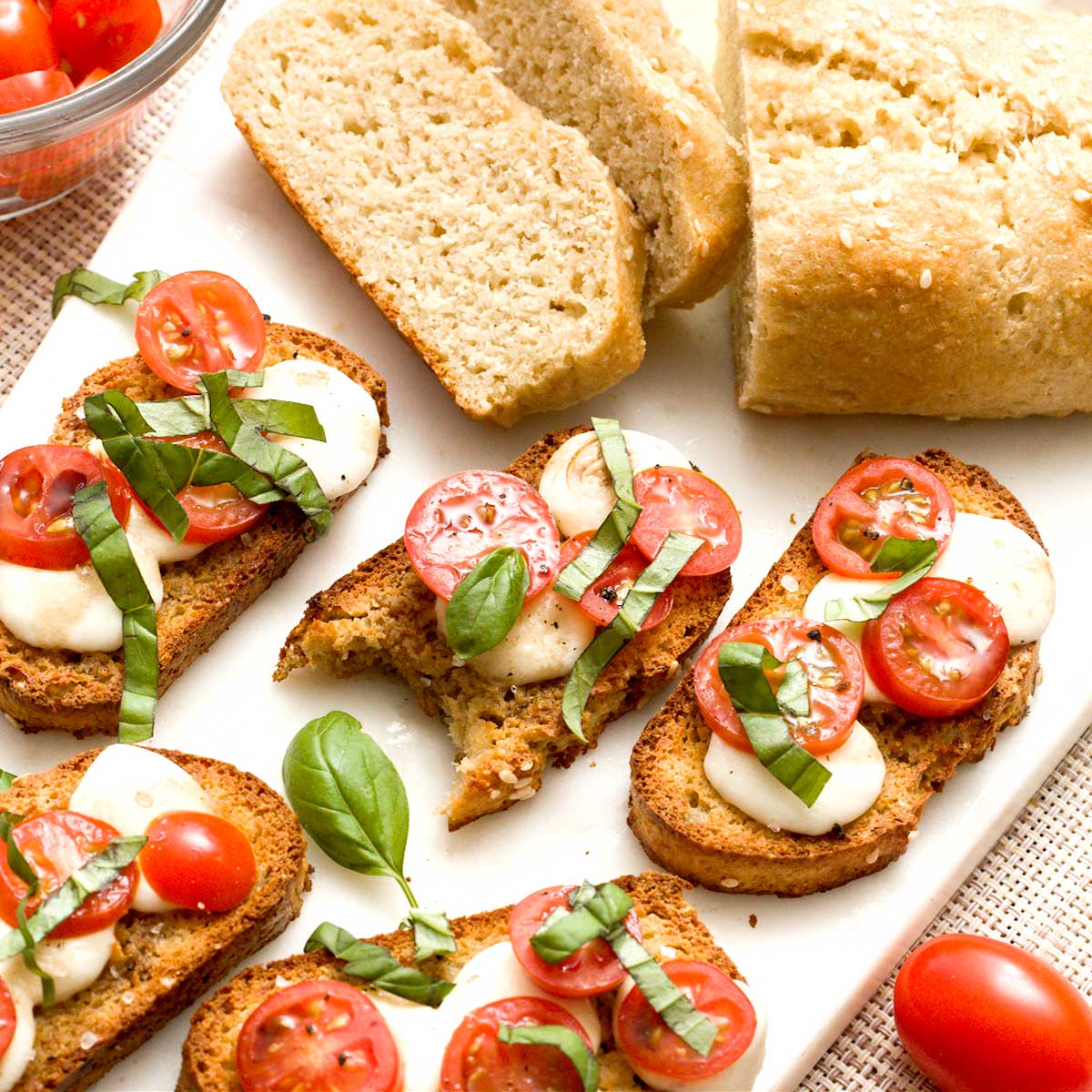
- Tomato basil mozzarella crostini: Toast slices until golden, then top with fresh tomatoes, basil, and mozzarella. The bread holds up well and doesn’t get soggy like many gluten-free options.
- Italian grinder sandwich: Slice the loaf lengthwise and use it for a hearty sandwich. It holds layers of meat, cheese, and dressing without crumbling, which is hard to find with gluten-free bread.
Frequently Asked Questions
Do you love gluten-free bread alternatives?
If you enjoy easy, no-yeast breads that actually work, here are a few of my favorite recipes. These are all ones I make regularly, and many can be turned into simple appetizers, snacks, or quick meals.
- Gluten-Free Cinnamon Pretzel Bites (No Yeast)
- Gluten-Free Crostini Tomato Basil Mozzarella
- Cheesy Gluten-Free Garlic Protein Bread (No Yeast)
- Oat Cottage Cheese Bread Sandwich Bun Gluten-Free
- Oat Flour English Muffins with Greek Yogurt
- Greek Yogurt Protein Naan Bread (No Yeast)
- Easy Viral High-Protein Cottage Cheese Flatbread


Gluten-Free Cottage Cheese French Bread Loaf (No Yeast)
Gluten-FreeIngredients
- 1-1/4 cups oat flour (150g)
- 1/2 cup almond flour (56g)
- 1/4 cup grated parmesan cheese (30g)
- 1-1/2 teaspoons baking powder
- 1/2 teaspoon salt
- 1 cup cottage cheese (blended)
- 1 egg
Bun Topping:
- 1 teaspoon sesame seeds
- 1 egg white
Instructions
- Preheat your oven to 350°F. Line a baking sheet with parchment paper and lightly spray it with oil, or use a silicone baking mat.
- Add 1 cup cottage cheese to a blender or food processor and blend until completely smooth. This step is important. Any curds left behind can create wet pockets and affect how the loaf sets as it bakes.
- In a large bowl, whisk together 1¼ cups oat flour, ½ cup almond flour, ¼ cup grated parmesan cheese, 1½ teaspoons baking powder, and ½ teaspoon salt until evenly combined.
- Add the blended cottage cheese and 1 large egg, then mix just until a dough forms. It should feel slightly tacky but not wet. If it feels dry, add 1 to 2 tablespoons milk. If it feels too loose, sprinkle in a little more oat flour.
- Lightly oil your hands and shape the dough into a smooth loaf directly on the prepared baking sheet. Aim for even thickness so it bakes evenly.
- In a small bowl, lightly beat 1 egg white and brush it over the top of the loaf. Sprinkle with 1 teaspoon sesame seeds if using. This helps the crust brown and gives the loaf that classic French bread look.
- Bake for 28 to 32 minutes, until the loaf is golden and feels firm when lightly pressed. Transfer to a wire rack and let it cool completely before slicing.This cooling step makes a big difference. The bread continues to set as it cools, and slicing too soon can make the center feel gummy even when it is fully baked.
Video
Notes
Nutrition
Important Disclaimer
This recipe is created by a home cook and not a medical professional. Our ingredient philosophy is reviewed by RDNs, but this specific post is not personalized medical advice. Please consult your healthcare provider for dietary concerns.
Looking for more ways to cook and bake with cottage cheese?
Browse all of my cottage cheese recipes, including breakfasts, desserts, sauces, snacks, and savory meals.
Looking for more easy bread recipes without yeast?
Browse all of my no-yeast bread alternatives , including rolls, flatbreads, quick breads, and simple doughs made with ingredients that are easier to work with and quicker to make.


I love this recipe. I make it once a week. I also add an extra 1/4 cup oat flour. 2 tablespoons sunflour seeds and 2 tablespoons of Chia seeds.
That is so awesome, Kat! Thank you for sharing this with me. I love your additions 🙂
Can I use just almond flour?
Hi Jann, that’s an excellent question but I don’t recommend it. Almond flour can be grainy and is very moist. It does best when you combine it with a finer flour like a gluten-free flour blend or all-purpose flour if you don’t need it to be gluten-free.
Can avocado be added to this recipe?
That’s an excellent question, Paula. I haven’t had a chance to try that yet 🙂
Delicious! Here are the changes I made so that others may know what works!
I added a scant extra 1/4 cup oat flour instead of the parmesan and I used oat flour instead of oat and almond flours. I brushed light olive oil on the loaf & sprinkled with sesame seeds, then baked at 350 F for 29 min in my Breville Smart Oven (couldn’t bear to turn on the big oven in this heat). Such a treat to have great bread in such a short time! Thanks for the recipe, Nicole!
Hi Deborah, thank you so much for sharing your substitutions! I’m so glad you enjoyed it 🙂
I made this again yesterday. This time I used all oat flour, and instead of parmesan cheese I used a 1/4 cup of whole psyllium husks. I didn’t brush the top with anything nor did I add sesame seeds. The loaf was a little denser, but not much and still delicious! Both my grandsons (ages 5 and 2) were here this morning and enjoyed a piece too.
This turned out so soft but was still crispy on the outside! The flavor is really good with the almond flour.
Thank you, Jazmin! I have to agree 🙂
I have been looking for a recipe like this and it did not disappoint!! We’re also trying to eat more cottage cheese and you can’t even taste it in this bread. We ate it with some butter and loved it!!
Thank you so much for the review, Maggie! Our family loves it with butter, too 🙂
I am so excited to have a gluten-free french bread recipe to share with you! It is so easy and versatile and I hope you enjoy it 🙂